Bringing High End Textures to Opensim

The fact that everything is free in many Opensimulator grids may feel like a refreshing change for those who came from Second Life, where capitalism reigns. No money! No economy! Content creators freely share what they make. Take everything you want – it’s free!

On the other hand, it also presents a challenge for builders, especially those for whom quality is important. Most suppliers of high-end building materials in Second Life – textures and sculpts especially – are professional graphic artists who make a living at content creation. Not many of them are willing to provide materials for use in Opensim. They are, understandably, reluctant to give their livelihood away in a grid where they can’t easily be reimbursed. Without their supplies, quality materials are not plentiful.

Thus, Opensim builders typically have been faced with difficult choices. We can try to rely on whatever freebies are available here, which can be hit or miss. A few builders, sadly, simply steal materials. Others do their best to learn to make their own original textures, sculpts, scripts and animations, and while that’s probably the best solution, the learning curve can be extremely overwhelming.

However, there is another option. As OpenSim based grids like OSgrid grow in popularity, more and more creators of high-end building materials are willing to license their textures and sculpts for use on other grids, not just the commercial grids like Second Life, Avination or Inworldz. If you want the best quality, and if you are willing to pay a few pennies for it, you now have a lot more options.

We would like to thank these pioneering content creators for their willingness to support OSgrid builders. In my next post, I list their names and URLs. I hope that all OSgrid builders who value quality will support their businesses, as they support us by enriching our world.

We want to encourage high-end content creators to continue providing great textures and sculpts for use in Opensimulator. Support goes both ways. If we expect them to support us, we must be willing to return the favor – by buying their products, and also by treating them with respect:

  • PLEASE respect licensing agreements. If the license says you don’t have permission to export building materials to other grids, don’t do it, no matter how much you want the item.
  • It is NEVER okay to give away purchased textures. It is okay to share things you made with the textures, but not the textures themselves. Do not pass textures to friends. Do not share textures.
  • When you use a purchased texture, do not give out your creation with full permissions. Make it no-transfer or no-copy. If you need to make something that is both copy and transfer, use only building materials whose creator clearly intended them to be freely shared.
  • If you have permission to export a texture to Opensim, do not re-import the texture into Second Life. This is the main transgression that stops most content creators from supporting Opensim. Also, if you make something in Opensim using a purchased texture or sculpt map, and import that item into Second Life. replace the texture or sculpt with the purchased version that shows the original artist as the creator.

If you don’t respect licensing agreements, you are only hurting yourself. Every time you use a texture or sculpt without permission, you make it less likely that high-quality textures and sculpts will continue to be available for to Opensim. Maybe you don’t want them; but when you don’t respect licensing agreements, you help to close off the supply to other builders who do want them. So please respect your fellow builders as well as the content creators whose work enriches our virtual world.

True power

Virtual worlds have opened a door to BDSM for many people, allowing them to explore their curiosity about it in a fantasy environment. People who would never do so in “real” life can try on handcuffs, be chained and bound, and even submit to a Dominant, all without the risk of physical injury or social stigma. The wild popularity of BDSM in virtual worlds like Second Life and OpenSim attests to its genuine appeal in the sexual imagination.

But while casual dabbling in BDSM is safe and easy in virtual worlds, this very ease can be problematic. Those who have only experienced Domination and submission (D/s) in virtual worlds often think their experience and comprehension is complete. To be fair, I think some do develop a deep understanding; and the experience can be legitimate and worthwhile even for those who only get a glimpse of their own hidden desires, without fully exploring them.

Sadly, while virtual BDSM may be physically safe, I have seen far too many inhabitants of virtual worlds cause real-world emotional damage because they have no real idea what D/s is, or what it requires of them. It’s true that there is no one “right way” to do D/s. My Master and I practice an all-or-nothing form of D/s called TPE (Total Power Exchange), but even casual dabbling in D/s is not intrinsically wrong when it brings pleasure to all those involved. Unfortunately, too often it does not.

I’m not going to discuss the abusive sexual predators that lure women by claiming to be “Masters,” and then take advantage of them while ignoring a Dominant’s responsibilities. Much has been written of this elsewhere. In my case, I am fortunate to have a genuine Master who knows what he is doing, a good and loving man who takes his responsibilities seriously and who has the training, good character, compassion and strength to be a skilled Dominant.

Instead, I’d like to reflect on women I have met who call themselves submissives, but who are only posing. Bogus submissives have only their own self-interest in mind; they manipulate others and take advantage of them for their own agenda. They cause just as much emotional damage as bogus Masters. They are a special breed of sexual predator.

The dabblers who call themselves submissives usually have no idea what submission involves.

If you enjoy being restrained during sex… you are not necessarily submissive.

If you are attracted to a strong-willed man… you are not necessarily submissive.

If you wear a collar and know how to nadu… you are not necessarily submissive.

If you always do what everyone tells you to do… you are not necessarily submissive.

If you cooperate with a Master because you have no choice… you are not necessarily a submissive.

If you allow a Master to do only what you want him to do… you probably are not submissive.

If you tell a Master only what you think will get you laid… you probably are not submissive.

If you think you could roleplay as submissive sometimes… you probably are not submissive.

What are the differences between a bogus submissive and a genuine one? To me, the difference is a matter of character and nature. Some people play a submissive role. But some of us find that submission reveals our truest selves, our deepest, most authentic nature. Submission isn’t about what we do. Submission is about who we are.

Does the idea of surrendering complete control of yourself to a trusted Master thrill you? Does the excitement increase the more you surrender? Are you turned on by the thought of permanently abandoning your will to his? If so, then you probably are a submissive.

On the other hand, if it fills you with dread and suspicion, you probably are not a submissive.

The acid test comes the first time the Master directs you to do something you really don’t want to do. Many women are willing to play a submissive role temporarily—as long as she trusts that the Master will do exactly what she wants him to do to please her. There is nothing wrong with that. But it isn’t submission, it’s just cooperation. True submission is complete surrender. Of course you want pleasure, and a good Master wants that for you. But TPE submission means completely letting go of your own will, and trusting him, without setting your own pleasure as a condition. For a true submissive, that very act of surrender is the pleasure—that intoxicating rush of letting go and giving yourself to him.

You may think it sounds passive and easy to surrender your will. Power exchange is far from easy. It is a conscious choice you must make, over and over again, that requires a great deal of courage and inner strength. Saying yes to him means that you must be strong enough to say no to everyone else, including yourself. True submission means having true power, and then giving it away. You must own your own power, before you can give it away.

You may be able to deceive him, to play along and make him think you are surrendering, while in reality you hold on to your own power. That’s why I mentioned character. You know if you are not being honest. And eventually it will come out. If you are willing to lie to your Master, that is a matter of character. If you know you aren’t a true submissive, if you basically just want him to be your lover on your own terms, and yet you play the part of a true submissive—you are living a lie. You may in fact be a sexual predator. You risk causing emotional damage, whether you mean to or not.

If my description of total submission doesn’t appeal to you, there is no fault in it. It’s not a bad thing to admit that you like to role play as a submissive occasionally, but that you are not really cut out to be an authentic, 24/7 TPE submissive. I encourage you to enjoy dabbling in BDSM, and to take and give pleasure where you can.

But if you know this about yourself, do not try to hide it. If you are not a true submissive, do not try to pass yourself off as one.

In recent months, I have watched more than one bogus submissive wreak havoc in the lives of people I love. With only her own pleasure in mind, she accepted a collar and the loving care and protection of a Master. Thinking only of what was in it for her, she mouthed the words “yes Master” without revealing what she was thinking: “…as long as it’s convenient for me.”

She didn’t want a Master; she just wanted a lover.

She did whatever it took to lure him into a relationship under false pretenses.

She played the role, like a game, taking what she could get.

She let him love her, as long as it was convenient.

And when it came time to live up to her promise, she deserted him and broke his heart.

She damaged us, too. The betrayals cut like a knife through the community of family and friends who supported our beloved Master and friend. We agonized with him, hurt for him, dropped everything to stand by him when he needed us. We, too, suffered, as his open and generous spirit shuttered tight, his trust broken.

But the bogus submissive never stopped to think of what her lie would do to us, or even to him. She never considered the pain she caused. She thought only of herself.

She left in a whirlwind of drama that she created, a smokescreen with which she attempted to veil her deception. She did not have the strength of character to say, “I’m sorry. I thought I was cut out for this, but I’m not.” Instead, she invented some bogus reason to make it seem that she was not at fault. But she fooled no one, except perhaps herself.

I have seen this scenario play out more than once in recent months. My motivation in writing this post is not to claim “I’m a true submissive and you’re not.” It is, rather, a cry of resentment that the dishonesty of bogus submissives hurts me and my loved ones.

Victorian store: a Painted Lady

I decided to try Victorian…! We wanted to make our new shopping area reminiscent of New Hope, PA and other small towns where the original Victorian houses have been converted to funky, eclectic shops. I made most of them fairly simple, but on this one, I got inspired to go full tilt. As they say, if you stood still for 5 minutes, the Victorians would try to decorate you… so the last thing a Victorian house should be is simple!

It’s loaded with highly detailed authentic features, including a wraparound porch, turret tower, sculpted balustrades and spandrels, fretwork, decorative shingles and “Stick” detail. The interior was painstakingly textured to match the Victorian styling. The double hung windows even work!

I took my inspiration from various Queen Anne style houses in New England, and the famous “Painted Ladies” of San Francisco. I had a lot of fun researching the style, and planning the materials.

This is one of those “only in OpenSim” builds at 985 prims (no problem, we’ve got plenty more). A residential version will be forthcoming soon, with authentically styled interior. I might try to do a somewhat less primmy version for SL.

The store is offered rent-free. Land ownership is included, also free. We want to encourage content creators to share their creations with our residents by offering them free space to do it. If you’d like to move in, contact Walter Balazic or Camryn Darkstone inworld in OSgrid.

Come see it on the Littlefield NE sim in OSgrid.

See more of Littlefield at our Flickr page.

Intentional Stupidity

I fail to understand why anyone would choose to make themselves look stupid by griefing.

As a method of making a point, griefing is inefficient. It has no effect whatever. It doesn’t affect the target. It has no emotional impact. It doesn’t persuade anyone to change their opinion.

Well, that’s not precisely true. It does persuade people that the griefer is an idiot. And in fact it usually persuades people to have sympathy for the party who was griefed. It makes the victim look better, and turns public opinion in their favor, and against the griefer and his or her point of view. So unless the griefer’s intent was to look childish and stupid, it actually has the opposite effect from what was intended.

It’s not just bad judgment — it’s negative judgment. It is as if the griefer tried to think of the worst possible choice, and said to him or herself, yes, I’ll do that.

One of our friends had a small griefing incident at Littlefield. It was not a big deal. What the griefer must have thought was damage was easily undone. No one panicked, no one had their feelings hurt; it was more boring than anything else. But it gave me a moment to wonder why anyone would intentionally choose to make themselves look stupid by griefing. If your point of view is so weak that this is the only way you can think of to express it, you might consider just letting it go, and preserve at least the appearance of intelligence.

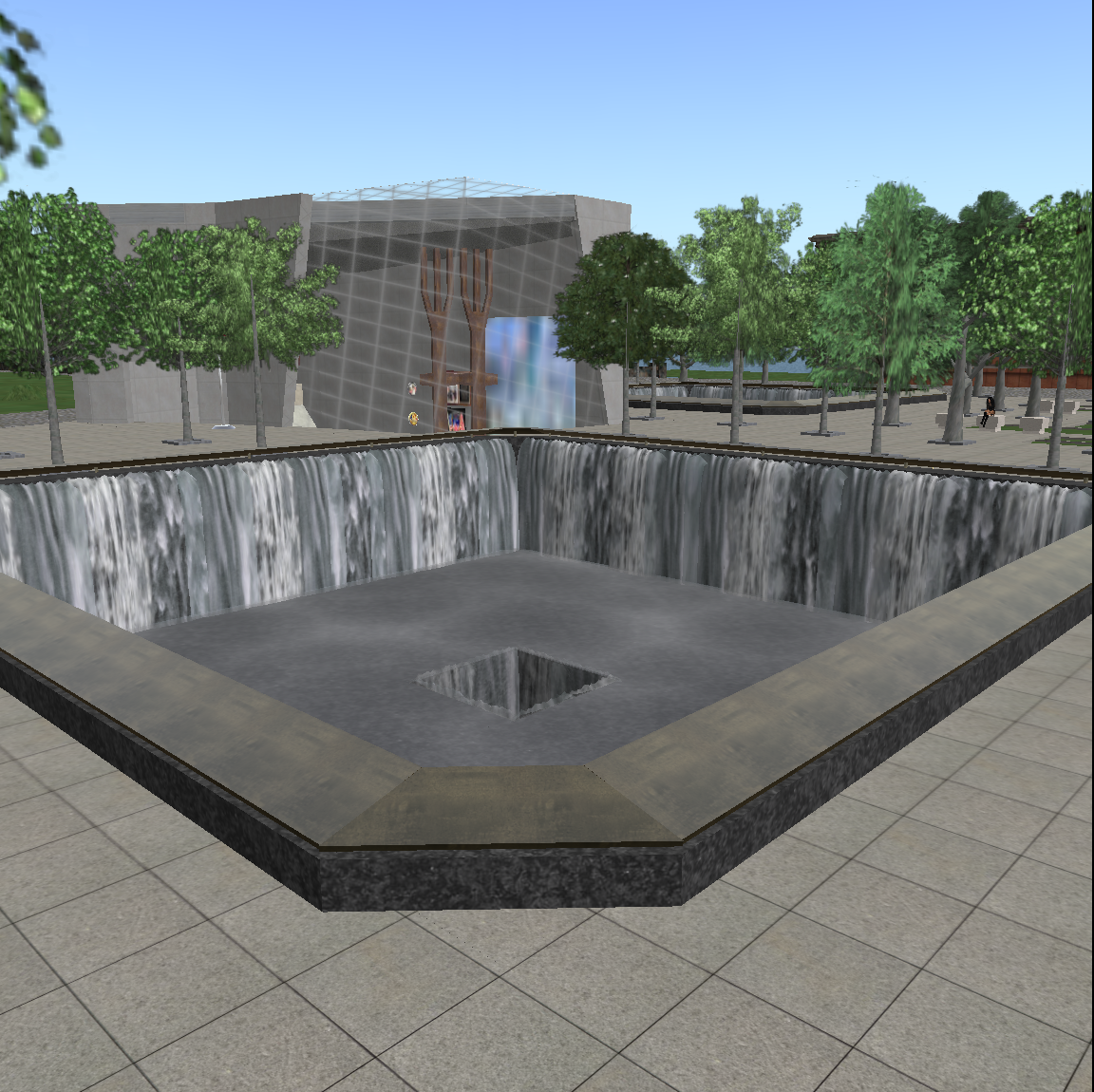
In Remembrance 9/11

9/11 memorial in Littlefield

To commemorate the 10th anniversary of September 11, 2001 I built this replica of the 9/11 Memorial in NYC that opened today.

Members of the Littlefield community gathered here at 8:46 a.m. to be with each other, and remember and reflect together.

9/11 memorial in Littlefield

Death is not extinguishing the light.
It is putting out the lamp
because the dawn has come.

–Tagore

The Backwoods Cabin

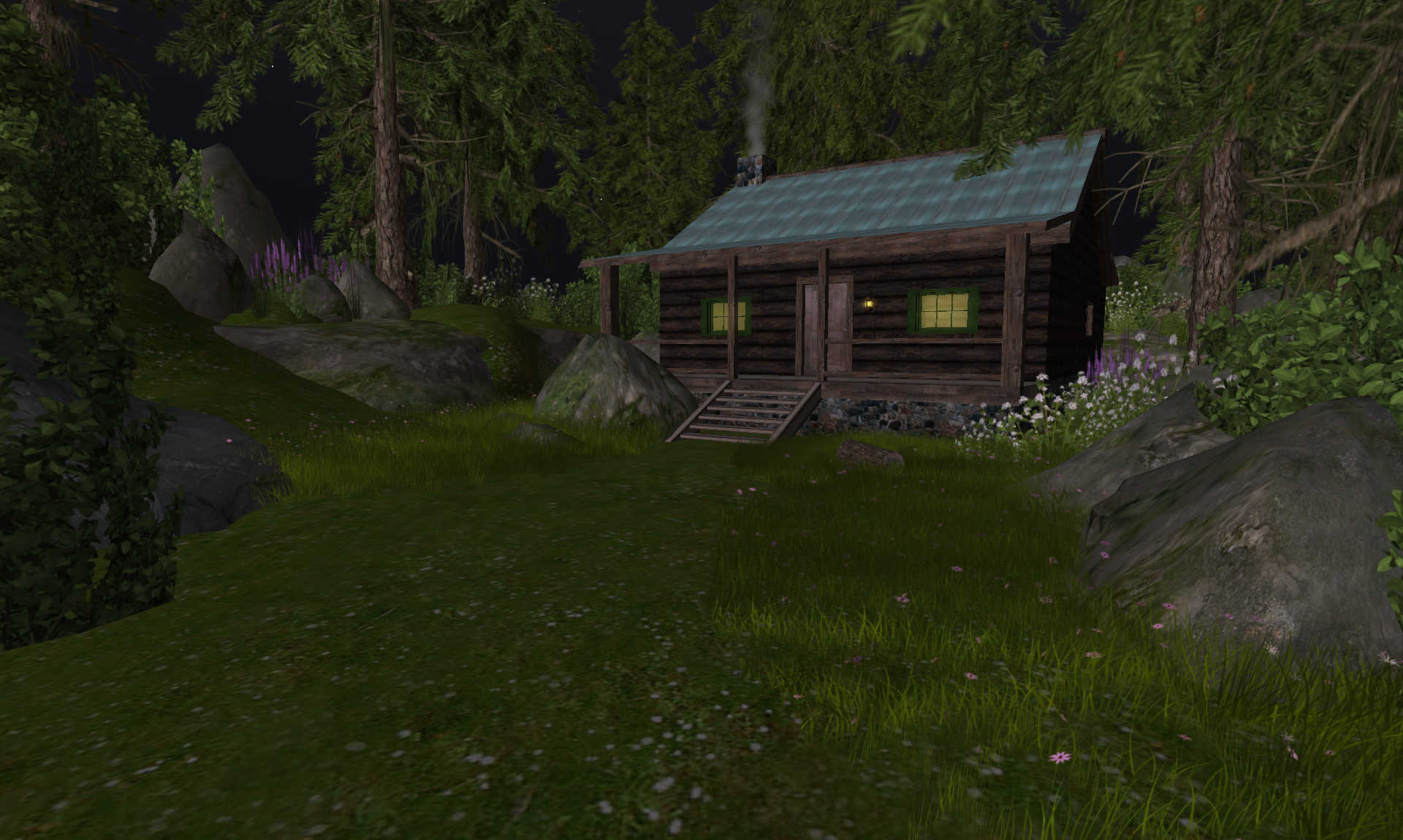
It has been awhile since I posted. I want to put up photos of some new things from the other grid, and of course the Chinese Garden. But first, I will just take a moment to share a quick skybox I did for some friends. The assignment was to create a backwoods cabin with a certain… um… atmosphere that tells a story. Let me explain… (click thumbnails for larger photos)

You’re hiking in the wilderness, two days’ walk from the nearest road, when you stray from the trail. You try to You stumble into a clearing, where you see a small, run-down shack.make your way back, but the forest only gets thicker. You start to wonder just how lost you are, as night begins to fall. Suddenly you stumble into a clearing, where you see a small, run-down shack. Hidden in the deep woods, nearly obscured by tall grass, it’s unlikely that anyone would know it was there unless they were looking for it. At first, you think it must be an abandoned hunting cabin. But there is a thin wisp of smoke rising from the chimney, and a faint flicker of firelight warming the windows. Someone has been here recently. But who would live in such a remote place?

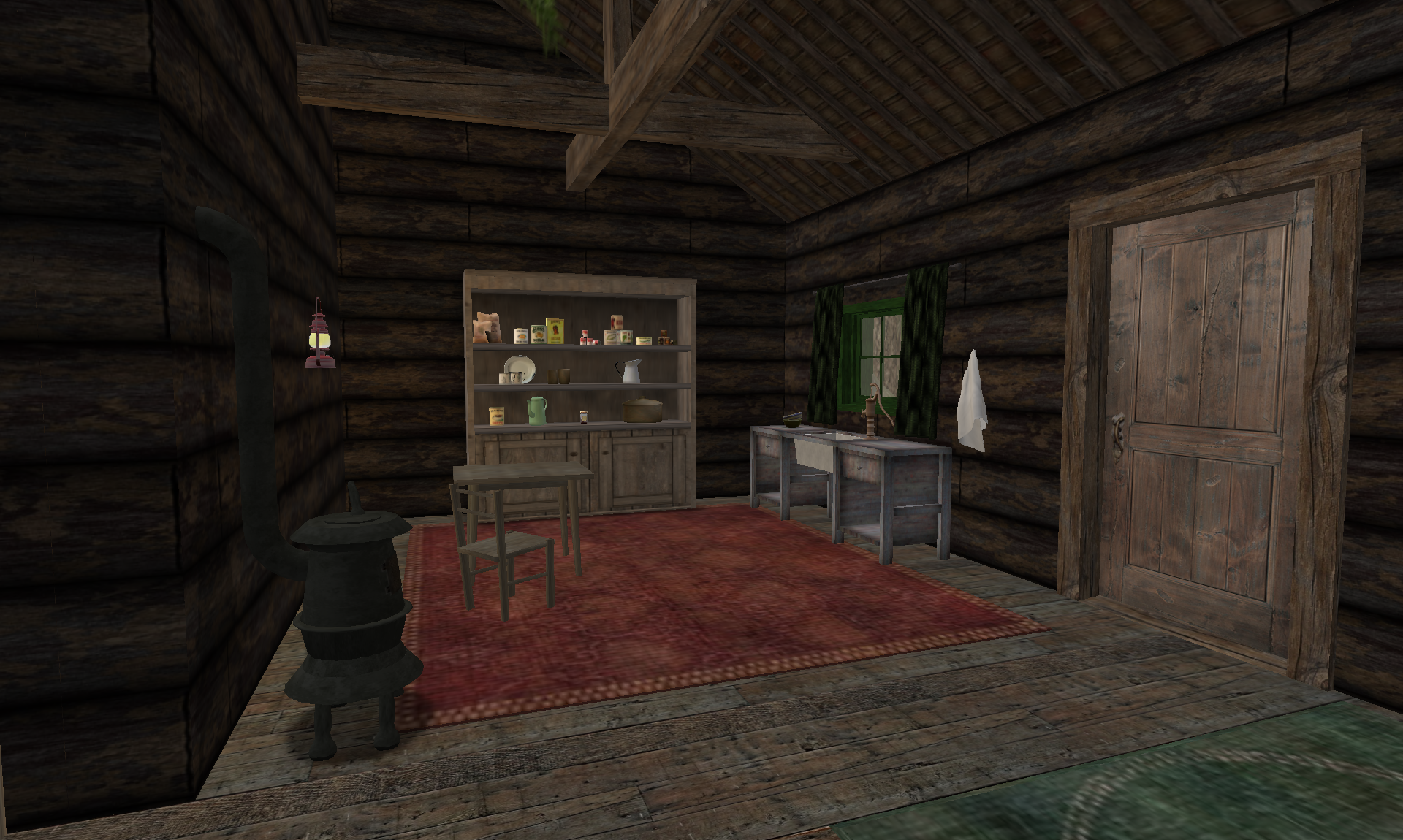
Something tells you that you should just leave, but your curiosity gets the better of you. You walk up the rickety front steps onto the porch. You hesitate a moment, but then you knock. The heavy wooden door swings open with a creak. You call out, but there is no answer. Stepping inside cautiously, you find yourself in a small kitchen. The furnishings are spare; you realize that this place is so far from civilization that any supplies would have to be packed in on foot. The old fashioned hand pump at the sink, the kerosene lantern and the pot-bellied wood stove tell you that this cabin is way off the grid. Still, there are neat stacks of cans and sacks of food, and a few simple, clean dishes. Someone is definitely living here.

The warm glow of a crackling fire in the large stone fireplace draws you further inside the small cabin. The sparse decor is limited to a few well worn rugs, an old armchair, solid woven curtains, and… That’s when you are startled to see the block and tackle hanging from the massive beam overhead. The heavy equipment looks out of place in this tranquil setting. What could the cabin’s occupant need to hoist? Beneath, metal cleats are bolted to the floor. Nearby, an odd-looking wooden crate with doors stands in the corner; a tattered blanket lies rumpled inside, and an empty old bottle is on the floor beside it. So very strange… What goes on inside this dark little cabin?

Certain now that you are alone in the remote backwoods cabin, you slowly open the single bedroom door and peer inside. At first glance, it seems spartan but normal. Illuminated by the glow from two old fashioned oil lamps, a soft brown blanket is draped over a worn but clean mattress on a sturdy steel frame. It’s only when you notice the objects on the dresser that it all begins to sink in. A coil of rope. A tube of some substance. A black scarf. A glint of metal in the open drawer… was that a knife? Handcuffs? A chill runs down your spine. It’s time to get out of here.

You race down the path, away from the creepy cabin and into the darkening night. The tall pines that just a few moments ago towered with majestic beauty now seem to hover threateningly, concealing dark secrets. You wonder how you will ever find the trail again, to take you away from this place. Through the trees, you see a waterfall, and you rush toward its cleansing sound.

Water cascades down the granite cliff in sparkling streams. The natural beauty, hidden here in the wilderness, leaves you awestruck, in such contrast to the dark scene you just witnessed. Then you see her. A young woman, quite naked, is bathing in the pool at the base of the waterfall. Her long blonde hair and wet skin glisten in the moonlit night. You can’t help but stare; she is beautiful, and splashes in the water as if she had no cares. But you see the rope knotted tightly around her delicate wrists. Images flash before your eyes: the ropes tied to the rafters… the crate… they must be meant for this beautiful captive. Yet something is strange; if she is a prisoner, why does she seem so content? Where is her captor? You wonder, but realize, then, that this story, whatever it is, is not for you to know. Silently, without disturbing the girl, you turn and leave, to trace your path back to the world.

About the build: This was wicked fun to do. I completed this entire build in less than two hours, using a cabin I’d made before, and the wonderful Wild Mountain Pine materials from Heart Botanicals. The whole landscape, on a 100mx100m platform, consists of pre-made arrangementsmatching grasses, and off-sim islands (which work great as a surround for a skybox/platform) and it was done in minutes. For the scripted furniture that needed to have… er… certain animations, a little astute shopping led us to Dirty Deeds and then to the block and tackle which is the inspired work of Britt Halberstam. I built a few things, then completed the environment with atmosphere pieces from Rustica, Alchemy Immortalis, Dutchie and Shade. Two hours of dark fun! It may have been quick to build, but the owners have many hours of rich RP to look forward to…

About Grief

Today I have been thinking about grieving.

It’s one of the most difficult lessons I’ve had to learn in life: everything has a beginning, a middle, and an end. Nothing is permanent. Whether we are talking about a relationship, a job, a feeling, a possession, an experience, or a life, you will lose it eventually. No matter how deeply we love them, no matter how hard we try to hold on to them, no matter how perfect they are, situations change. People leave us. Things come to an end.

Learning to accept that truth was very hard for me. When something is good, naturally I want it to stay that way. When something good comes to its inevitable end, I grieve. That is completely normal. But I also tended to get angry about it. I could not understand how or why something so good could just… end. It seemed to me that good things should go on forever. I wondered what had gone wrong. I wondered how I had failed. I would be resentful, as if life had cheated me by taking away something, or someone, dear to me. That anger would smolder inside, on top of the grief. And I couldn’t let it go.

It took a long time, and surviving many losses, before eventually I began to accept that there wasn’t anything wrong. Loss is what it is. It is simply the way life works. It is neither bad nor good. I don’t like it, but it’s just how things are. When things end, it does not necessarily mean failure. It does not mean that someone did something wrong. Loss is not a mistake. Loss is natural. It is normal. It is inevitable.

I fought that truth for a long time. But eventually I accepted it. Once I did, a large burden was lifted from my soul. I stopped being resentful and angry that I should have to face loss. I got it through my head that facing loss is a universal human experience, and that I was in no way exempt… nor was I being singled out for suffering.

The next step was learning how to grieve. Not to be resentful, but to allow myself to feel sad. Just as loss is natural, so is grieving. In fact, if you don’t grieve, it seems to me more likely that something is wrong. Strong, healthy people grieve and feel sadness. There is no shame in sadness. In fact, sadness honors the memory of your lost one. And I think that the size of your grief reflects the size of your love. The more you loved the person, the more you grieve. You honor them with your grief.

But most of us don’t like grieving. We try to talk each other out of it. When someone we care about is grieving, it makes us hurt for them. We don’t want our loved ones to hurt, and naturally we don’t want to hurt either. We tell them to “be strong,” or we look for something to say to them to “make them feel better.” Perhaps “feeling better” is not what they need. As long as the grief is not debilitating, rather than trying to get the person to stop grieving, perhaps we should give them the freedom to feel, give them permission to honor their loss with their sadness, and simply be with them in their grief, support them, and care for them while they go through it naturally. And perhaps we should care for ourselves the same way, giving ourselves permission to feel.

The last thing I had to learn was how to grieve, and then… let it go. This was probably the most difficult part. For the longest time, I had no idea how to let something go. Was I supposed to just decide not to feel something any more? Who can turn their feelings on and off like that? I’m still not certain when or how I learned it. It wasn’t a matter of ceasing to feel something. It was more like continuing to have the feeling, acknowledging the feeling, but deciding to turn my attention elsewhere. I have learned to allow myself to be sad, and then to turn and focus on something else. Not to bury it, but to acknowledge it and then move on. I say to myself, “It was wonderful, and I will always honor and cherish the memory; but now the time for it has ended.” In my mind, I create a memento, and set it on a shelf in memory, where I will visit it from time to time, remembering the wonderful part. Then I allow myself to not think about it all the time. And somehow, eventually, either the sadness gradually subsides, or else my capacity to bear it increases; but one way or another, it no longer weighs upon me as much.

Grief is complicated. Everyone grieves in their own way. Even for one person, grief might be different from one situation to the next. However it goes, grieving is an important part of living. Knowing that all things end should make us appreciate and honor each precious loved one, and each present moment even more. Feeling grief reminds us that we are human. Without loss, there could be no change; without change, there could be no renewal, no growth. And our ability to change and grow in wisdom is part of our humanity.

And, after all, one day, even grief will be no more. Grief, too, will end.

.

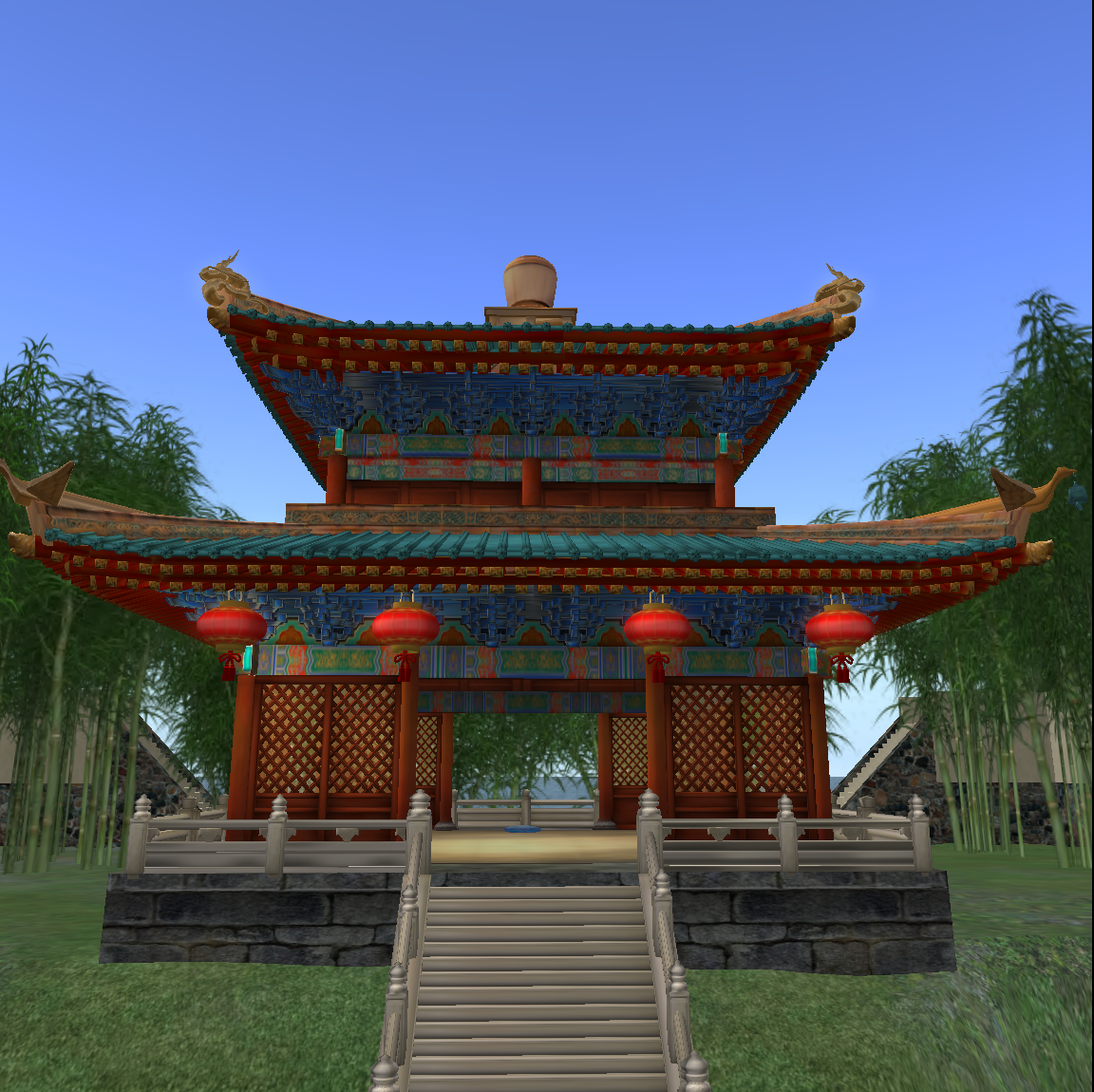
Chinese Scholar’s Garden

I have just started on a new project that is taking me to yet another new world. This time, it’s not a virtual world, but a world of concepts, aesthetics, and beauty that is totally new to me.

A friend of mine asked me to build a Chinese Scholar’s Garden. Without knowing anything at all about what that meant, I accepted the challenge. As I began to research the style, I uncovered a vast new universe of thought that has drawn me in more deeply as I continue. This is not Chinoiserie — European impressions of China — this is authentic China, a world that fascinates me by being so “other”.

They are called Scholar’s Gardens because creating one was a favored activity of the scholar class in ancient China. Whereas I am accustomed to a house surrounded by gardens, this is, instead, a garden surrounded by the house. Typically it consists of a series of courtyards; rooms in the house have openings looking into the garden area. Paths and covered walkways lead one on a journey, drawing you into it more and more deeply, offering interesting views and perspectives at each turn. Everything in the garden has significance; there is meaning attached to every plant, every rock, every shape.

I have only just started so I don’t have a lot to share yet. I paled when I read, “The task was considered so complex that only a scholar was capable of completing it, thus his garden was a measure of his knowledge.” I feared that I had no business even attempting such a feat. But I am very lucky to have made friends with one of the most outstanding builders on the grid, Ryusho Ort, whose unsurpassed expertise on Chinese architecture is keeping me grounded and focused.

I will share more as soon as I can!

The next chapter, wherein I colonize a new planet

Last summer, Walter began to worry about the future of Second Life in the face of growing evidence of the financial struggles of Linden Lab. In particular, he worried about how we would keep our family together, if Second Life should suddenly tank. He decided to work on a backup plan: building us a second home, in another virtual world. Not to leave SL; but to establish a beachhead, a fallout shelter, a Plan B.

After a few months of experimentation with various virtual worlds, he decided that we would build in the OpenSim world of OSgrid. One attractive thing about it is that there is no TOS, and no restrictions on “adult” lifestyles. Also, it is incredibly cheap. For less than the cost of a single homestead sim in SL, we could have 24 full regions, each one with no less than 20,000 prims, some with much more. Unlike SL, we are connected to OSgrid but our regions are hosted on our servers; that gives Walter full control over our world. No overlords; no being at the mercy of someone else’s poor business decisions. For Walter, and for our family, this was perfect. Walter was really excited. I think this is something he was born to do.

Walter’s imagination saw the possibilities, not only for our own family, but for the whole BDSM community on SL. Linden Lab is, to put it charitably, increasingly less hospitable to the BDSM community. But having our own grid would put us in charge. We would not need to conform to someone else’s rules. We would make our own rules, and protect and celebrate our way of life. So Walter hatched a plan to create a virtual world, not just for our family but for the whole BDSM community. And thus, Littlefield was born.

“Our hope is that Littlefield will be a safe, fun, and rewarding environment for the BDSM/Adult/Fetish community. We hope this community will bring together like minded individuals who will be able to create, interact, and have fun with very limited cost. We hope to offer some clarity and education about the BDSM/Fetish lifestyle to help anyone who is curious or wants to learn about the practices of BDSM in RL.” –About Littlefield, by Walter Balazic

As good as that sounds in theory, I will admit that at first I was reluctant. I love Second Life. It has been my home for four years. I love the creative people and the amazing builds and artworks they have made. I love my friends. I love the visual splendor of the world. I love being able to explore strange and wonderful new environments and experiences. I marvel at what people are to pull forth from their minds.

My first few visits to alternate grids did not reassure me. I love Walter very much, and I believed in his vision. Yet, at the same time, my initial experience was unappealing. For one thing, it was lonely: 5000 sims and I rarely saw more than 80 people online in the whole grid. Then there was my appearance, of which I am very conscious in Second Life. I am not a fashionista by any means, but I do love looking good; I have taken great care selecting skins, shapes, hair and clothes and I really appreciate the artistry that goes into making them. Alas, upon arrival in OSgrid, I looked like a 2006 noob; and even worse, the only skins, hair and clothes I found were freebies from that same era. I couldn’t find an AO so I was stuck walking like a duck. The buildings and landscaping around me were amateurish, lacking that spark of design sophistication that makes SL so appealing. I got very depressed over it. What would my life be, here? Yes, Walter would be in the new world, but the prospect of disconnecting from everything else I loved in SL seemed grim beyond words.

So I sat down to think things through. As I often do when pondering a dilemma, I begin by reminding myself of that which is most important, the sine qua non. And that is Walter. He is the most important person in my life. I may live in a virtual world, but my home is in him. He is my center, my ground, my reason for being. At my collaring, I made a vow to stay with him, to follow him to the end of all things. And I will, even if it were to mean forsaking everything else.

Having established that, I began to ponder my dilemma. Staying with Walter was a source of happiness. So what was making me unhappy? I focused on two things. My avatar looked terrible; and the world around me looked grim. Well… what if, instead of just lamenting the problem, I tackled it head on? Could I fix those things? Would there be a way to procure good skins, decent clothes? Instead of accepting as a given the uninspired world I saw, could I build something better, a world that was visually pleasing?

The more I thought it through, the more I began to see myself, not like a refugee, but almost as a character in a science fiction novel–a pioneer on a spaceship sent to colonize another planet. If we wanted something, we would have to find a way to bring it with us, or, more likely, make it ourselves; there would be no stores where we could just buy things. Could I do this? I was pretty sure I could make buildings, but could I make my own trees, my own clothes, my own hair… my own skin?

I thought about it for several days. Then it was time for action. I had to build just one thing, something simple, something that could reassure me that other things eventually would be possible. I sketched out a simple plaza, with fountains and planters and benches. When my friend VonGklugelstein Alter gave me permission to use his textures in our new grid, things suddenly started looking up. I built a few stores. They didn’t look half bad. Inspiration hit, generating ideas for a community center. I experimented with making a tree. I bit the bullet and started to learn Photoshop. I found clothing templates I could work with.

I’m not sure exactly when the transition happened, but somewhere in there, I went from being dragged reluctantly into what seemed like a prison, to voluntarily spending almost all my time there, because it’s so much fun.

There are a LOT of challenges. But now, instead of depressing me, the challenges energize me, and even entertain me. If I need a building tool, I can’t go out and buy it. I have to make it. (But it’s not such a bad thing, is it, to learn how to do it myself?) There is no fashion world on OSgrid; no other designers, no shopping, no couture, no skin makers, no hair makers. But some makers of clothing templates in SL will license their content for other grids; so I can make some cute outfits, and we have one person in our family who is really good at making clothes and shoes. I found a free skin on the internet that’s really good. Hair is still a challenge, but we are working on it. Animations are another, but we now have one pioneer who is applying herself to that trade. My avatar now looks almost normal.

It is a different way of being. My SL has been, not so much about creativity, as experiencing and appreciating the creativity of others. It is a somewhat passive experience of consumption. On OSgrid there is not much out there available to be consumed. Whatever we want to consume, we must make. The experience of Littlefield is proactive, one of creating, colonizing our own new planet, building a world that we’re in charge of, for the benefit of our family, our friends, our community.

Walter was right about this. He usually is right. I am learning to trust that.

I am still in SL–I don’t see myself ever leaving SL–but pixel by pixel, the Littlefield part of my world is coming into focus. It stimulates a different aspect of my mind and heart. It is a place of limitless possibilities. A place that is all potential, all promise, all vision, unrealized as yet, but well on its way.

So long, Frank Lloyd Wright

In the past few months, my normally quiet Second Life has been changed somewhat by the spotlight of public recognition, due to a rather epic build I completed in July: a reproduction of Fallingwater, the famous Frank Lloyd Wright architectural masterpiece.

Others had built Fallingwater in Second Life before I did. My build drew attention for a few reasons. It was very detailed and accurate; I read everything I could find, spent weeks studying photos of the house and visited it in person to understand every detail of Wright’s vision. I challenged myself to a higher standard in the prim work and texturing. And perhaps most importantly, I recreated not only the building, but the surrounding landscape. Wright intended for Fallingwater to be a home in harmony with nature. How can you leave out the nature? Isolating the house from the landscape of which it is an integral part misses the point. Others had placed their build on top of a hill, or on a beach, or had ignored the palette of lush woods and dark slate, the shape of the sheltering ravine that rises around it, or the iconic soundscape of nature and rushing water.

My efforts paid off in an experience for visitors that helped them really understand what Frank Lloyd Wright was all about. It was so rewarding to me when people told me that, inspired by their visit to my build, they began for the very first time to take an interest in and appreciate the work of this great architect. That was worth the price. Donations never did cover the cost of keeping the sim open. Despite the fact that I really couldn’t afford it, I delighted in providing hospitality as more and more people visited Fallingwater each day. I would pop in to find couples having a romantic dance, people meditating by the falls, or just hanging out by the big fireplace in the living room. Everyone just loved being there, and I loved that they loved it. I think I achieved my goal of transparency: I didn’t want people to look at the build and see my work, I wanted people to experience Frank Lloyd Wright’s vision as if they were transported to the real place in First Life. Like a window, I wanted them to look through me, and see him instead.

Five months of enjoyment came to a sudden end this past week, when I was informed that the Frank Lloyd Wright Foundation had issued a Cease and Desist order insisting that all reproductions of Wright designs be removed from Second Life. Although it was not directed to me personally, it shortly became clear that I would eventually face legal consequences if my exhibit remained. Rather than risk a lawsuit, I removed the build on Wednesday, amidst much protest and righteous anger on the part of those who loved the place.

The actions of the Frank Lloyd Wright Foundation are among the most shortsighted and misguided I have ever witnessed from a nonprofit organization. Of what was I guilty? Being inspired by a visit to an historic home and the genius of a legendary architect. Learning everything I could about it. Freely sharing my excitement with others. Educating people about the design principles that made it so remarkable. Celebrating and taking delight in the ability of human beings to create such marvels. Apparently, despite their stated mission, these things are contrary to the goals of the Frank Lloyd Wright Foundation, who seemed more concerned about lost income than with the legacy of Frank Lloyd Wright.

It would be easy to be bitter about all this. All I did was build something wonderful, not for any personal gain but to inspire and educate others. The result was to get shot down and squelched. Who wouldn’t be bitter? Well… me. You see, I have a choice. I can choose to be indignant and angry and resentful. If I were, those feelings would be completely justified. It would also surround me in that negative energy that, over time, eats away at one’s soul. But that’s not the only choice. I can also choose to forgive. To continue to give, to help, to build, to let go of the negative crap and embrace healthier, positive attitudes and actions. It’s within my power to choose. And I choose the good.

In his 1968 booklet, “The Silent Revolution,” Kent Keith advised, “give of your time and effort because you care and want to give, not because you are expecting glory and prominence in return… Do things because you believe in them, and the simple satisfaction of having achieved them will be enough.” He goes on to admit that helping others often results in being attacked and mistreated by those you are trying to help. “And yet,” he says, “a deep concern for people makes it possible to understand that attack with compassion, and to keep helping.” This means having compassion for everyone, not just the people who are nice to you. The price is high, but well worth paying.

Dr. Keith went on to propose ten “Paradoxical Commandments” that later were adapted by Mother Teresa and posted on the wall of her orphanage in Calcutta. These words have been much on my mind the last few days, so I will share them here:

People are often illogical, unreasonable, and self-centered.
Forgive them anyway.

If you are kind, people may accuse you of selfish ulterior motives.
Be kind anyway.

If you are honest and sincere, people may cheat you.
Be honest and sincere anyway.

If you are successful, you may win false friends and true enemies.
Succeed anyway.

The good you do today may be forgotten tomorrow.
Do good anyway.

What you spend years building may be destroyed overnight.
Build anyway.

If you find serenity and happiness, some may be jealous.
Be happy anyway.

Give the world the best you have, and it may never be enough.
Give it anyway.

In the spirit of these wise words, I will now turn away from the public spotlight and return to a quieter life. I will turn away from anger, blame and resentment. I will focus on giving and loving, and on building people up, not tearing them down.

Something wonderful came to an end, for no good reason. But building Fallingwater was worth the price.

..::::..

You can read more about the actions of the Frank Lloyd Wright Foundation at Prim Perfect and some of the reaction from other residents.