Architecture and Personal Growth in Littlefield: How I Spent My First Year

One year ago, on April 6, 2013, Littlefield Grid was born.

With the birth of the grid, we embarked on an amazing adventure. In just one year, Littlefield Grid has attracted a wonderful, active community of over a thousand members. In our very first year we have become one of the most active and popular Opensimulator grids. We have a fabulously talented group of people making this grid what it is. It makes my head spin to realize how much has been accomplished already. I can’t wait to see what happens next!

For me the first year has been a frenzy of building: creating the spaces to be the theater for the friendships and relationships that are the lifeblood of our grid; making something out of nothing. The occasion of the first anniversary made me sit back for a moment and take stock.

I am impressed with how much the grid has grown. But I am also impressed with how much *I* have grown. At my advanced age (rapidly approaching a milestone) I have developed a completely new interest – architecture. This is all because of my Master, Walter Balazic, who encouraged me to build a very BIG thing: a reproduction of Frank Lloyd Wright’s masterpiece, Fallingwater. I had never tried to build anything of that magnitude before, neither in size nor in significance. It was a daunting task. But he inspired me and encouraged me and before I knew it, not only had I built it, but I had won an award, built a whole city covering nine regions and immersed myself in learning several new styles of architecture. Imagine! Truly, one is never too old to grow.

We are just getting started. But I just want to take a moment to reflect on a few of the architectural projects I have completed for Littlefield Grid. This is basically the web version of my in-world exhibit for the Littlefield First Anniversary Expo.


PAINTED LADIES are American Victorian homes in the Queen Anne Revival style painted in three or more colors to enhance their architectural features. First used to describe San Francisco’s colorful Victorians, the term also refers to Queen Anne Revival homes in other American cities such as Cape May, New Jersey. Distinctive features of American Queen Anne Revival style include a wraparound front porch, a corner tower (often round), painted gables, spindles and balustrades, windows crowned with pediments or gables, bay windows, and combinations of patterned wood shingles in a fish scale design.

Littlefield Victorian Store, American Queen Anne Revival Style

My build: Littlefield Victorian Store

Famous RL Examples of “Painted Ladies“:


 Painted Ladies: American Queen Anne Revival Style houses in Haight Ashbury district, San Francisco  Carson Mansion, Eureka, Calif., American Queen Anne Revival Style


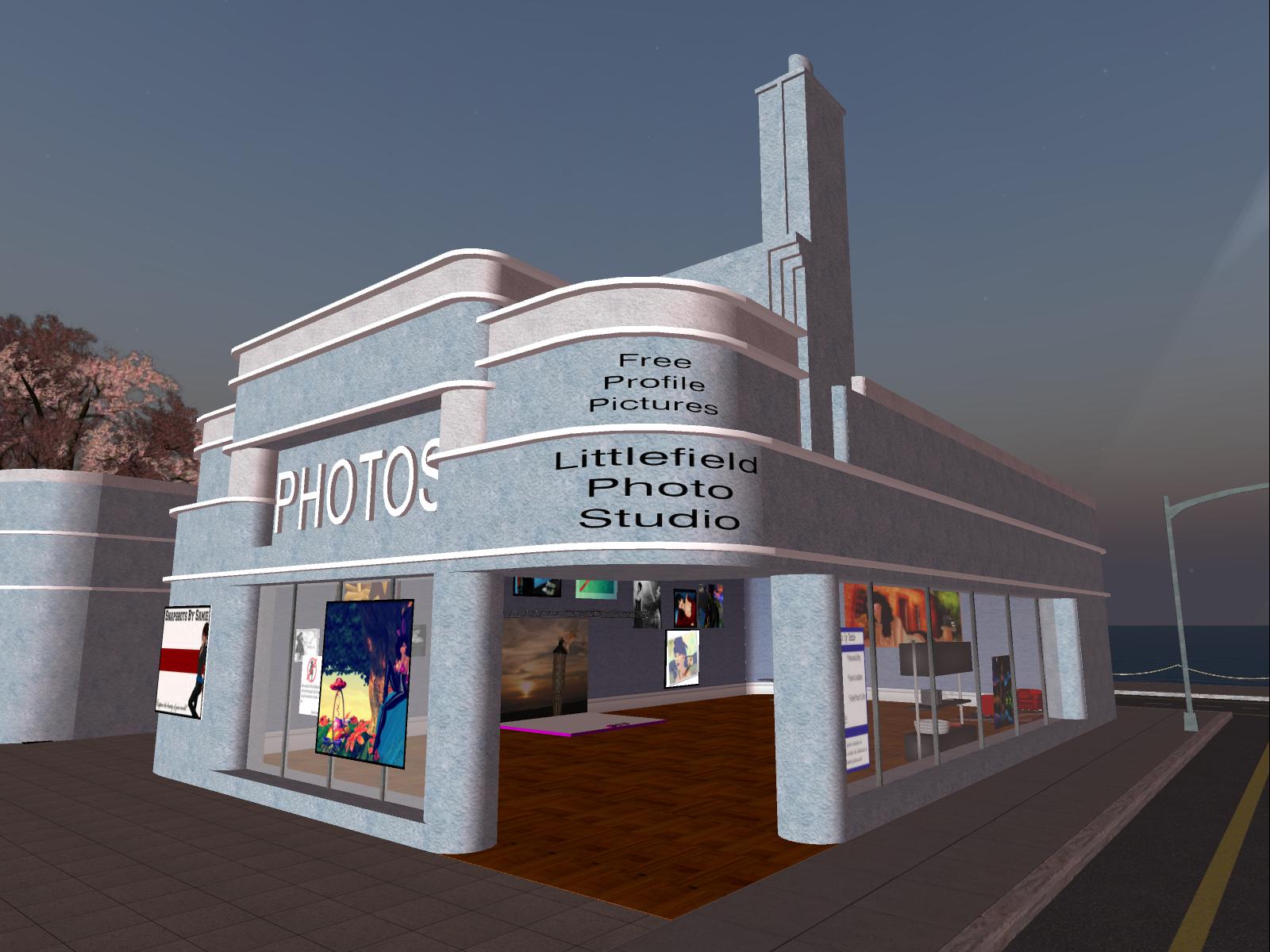
STREAMLINE MODERNE was a late type of Art Deco architecture and design that emerged in the 1930s, stripping Art Deco design of its ornament in favor of an aerodynamic expression of motion and speed. The style emphasized long, sleek profiles and rounded corners. Applied to everything from automobiles and trains to toasters and radios, the futuristically aerodynamic style of Streamlining was associated with prosperity and an exciting future.

Littlefield Adult Mall Store in Streamline Moderne Style by Camryn Darkstone

My build: Littlefield Adult Mall Store

Famous RL Examples of Streamline Moderne:
Pan-Pacific Auditorium, later used as design for Disneyland entrance Joseph Stalin Locomotive, example of Streamline Moderne


MINIMALISM is a trend in architecture in which unnecessary elements are removed to achieve serenity in design. Basic geometric elements of lines and planes are organized as simply as possible to define the space. Unnecessary interior walls are removed, creating open floor plans. Where walls are necessary, glass is used as much as possible to unite exterior and interior space. A single shape or the connection between two intersecting planes may be used as a design motif. Furnishings are often predominantly white, leading to the nickname ‘white chic.’

Architecture Exhibit, Littlefield Grid First Anniversary Expo: Minimalist Design

My build: Exhibit – One Year of Architecture in Littlefield Grid

Famous RL Examples of Minimalist Architecture:

Mies van der Rohe: Barcelona Pavilion: Minimalist Architecture Tadao Ando: Church on the Water: Minimalist Architecture


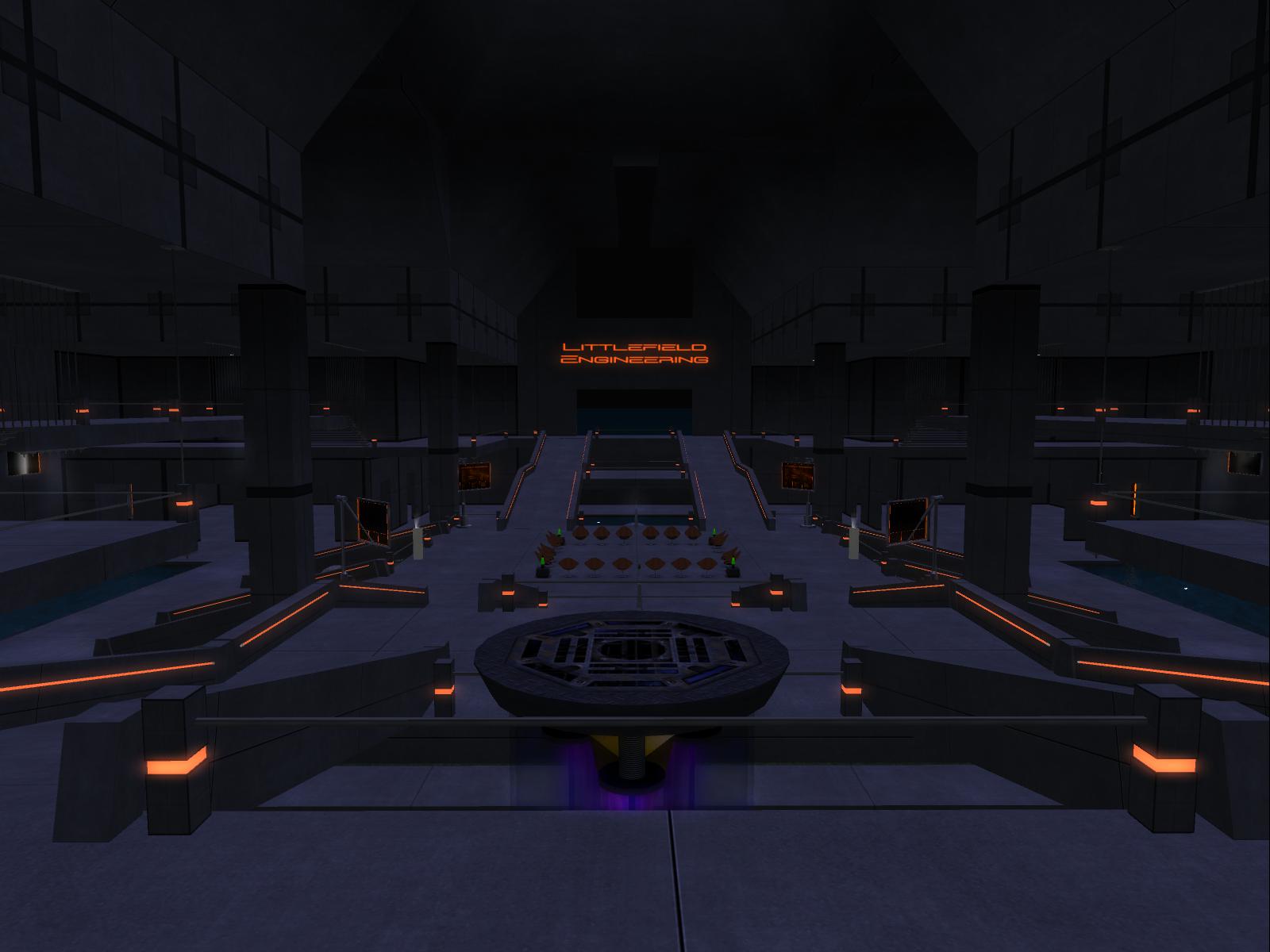
BRUTALIST architecture flourished from the 1950s to the mid-1970s. Examples are typically large buildings, massive in character, fortress-like, with a predominance of exposed concrete construction, used for its raw and unpretentious honesty to communicate strength and functionality.
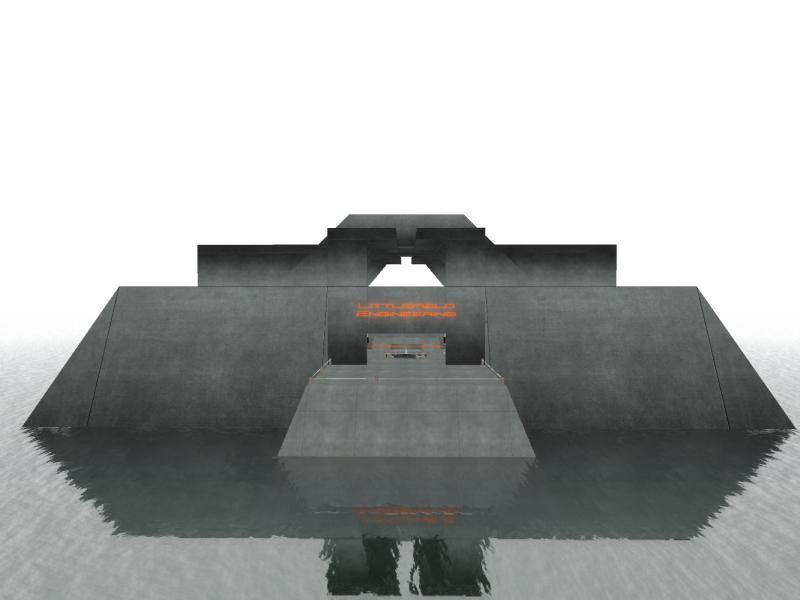
Littlefield Engineering: Brutalist Architecture

My build: Littlefield Engineering

Famous RL Examples of Brutalist Architecture:

Boston City Hall: Brutalist Architecture Delft Technology University, the Netherlands


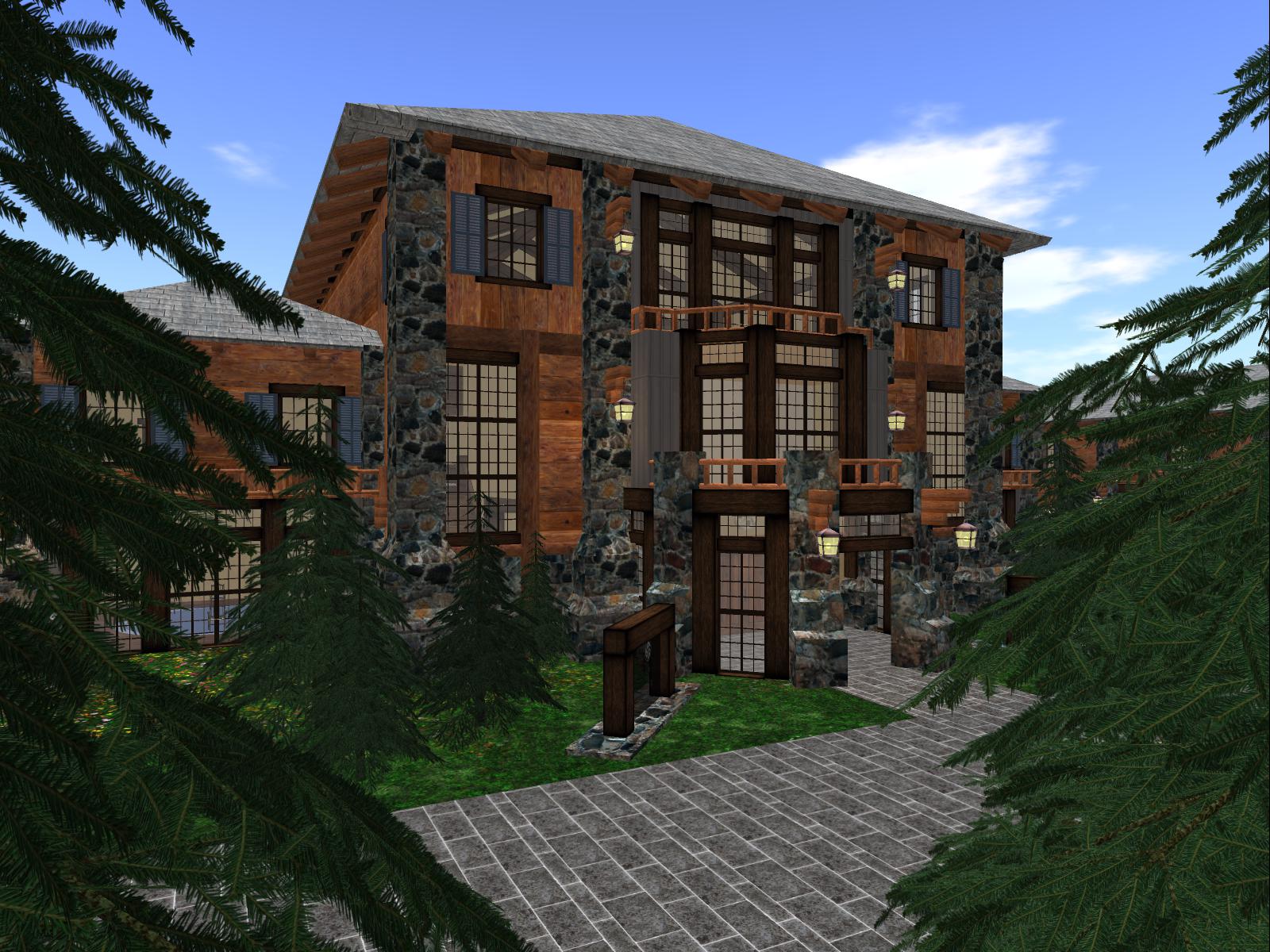
‘PARKITECTURE’ is the nickname for the style National Park Service Rustic that was employed in the National Parks of the U.S. to create visitor facilities without visually interrupting the natural or historic surroundings. The style matured in the 1930s with the construction of the luxurious Ahwahnee Hotel in Yosemite. To attract Eastern visitors to the National Parks of the ‘wild’ West, America’s railroads built grand hotels like the Ahwahnee, offering every amenity of the era, in the guise of a rustic mountain lodge.

Littlefield Conference Center: Parkitecture Style

My build: Littlefield BDSM Workshop Center

Famous RL Examples of Parkitecture:
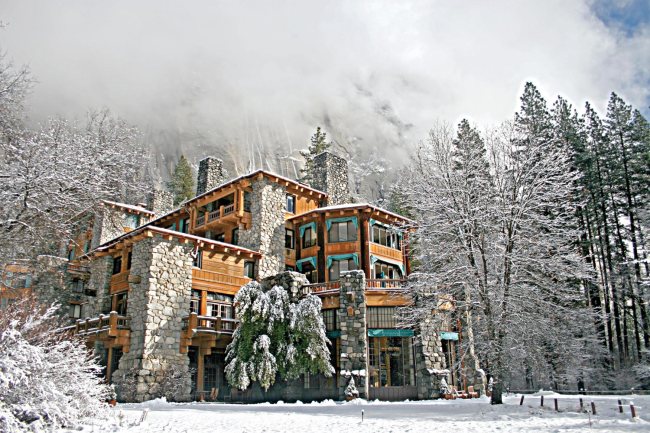
Ahwahnee Hotel, Yosemite: National Park Service Rustic Grand Dining Room, Ahwahnee Hotel, Yosemite: National Park Service Rustic


Littlefield, grow old with me. The best is yet to be!

Do It Anyway

It is a sad fact of life that “no good deed goes unpunished.”

Perhaps you have done a kindness by helping someone in need, as Androcles removed the thorn from the lion’s paw. But for every Androcles, whose lion repaid his kindness, there are ten who are attacked by the one they tried to help.

Some good Samaritans get so discouraged when this happens that they just give up, and stop helping others. If our motivation in doing kindness is to get a reward—even the reward of gratitude—we often will be disappointed.

Instead, we do kind things because that is the person we want to be. Do it for ourselves. Do it for our sense of self worth, our self respect. Do it for one’s own sake.

In his 1968 booklet, “The Silent Revolution,” Kent Keith advised, “give of your time and effort because you care and want to give, not because you are expecting anything in return… Do things because you believe in them, and the simple satisfaction of having achieved them will be enough.”

He goes on to admit that helping others often results in being attacked and mistreated by those you are trying to help. But his response was not disappointment. Instead, he proposed “Ten Paradoxical Commandments,” that rang so true even Mother Teresa posted them on the wall of her orphanage.

People are often illogical, unreasonable, and self-centered.
Forgive them anyway.

If you are kind, people may accuse you of selfish ulterior motives.
Be kind anyway.

If you are honest and sincere, people may cheat you.
Be honest and sincere anyway.

If you are successful, you may win false friends and true enemies.
Succeed anyway.

The good you do today may be forgotten tomorrow.
Do good anyway.

What you spend years building may be destroyed overnight.
Build anyway.

If you find serenity and happiness, some may be jealous.
Be happy anyway.

Give the world the best you have, and it may never be enough.
Give it anyway.

We show kindness to a lot of people on Littlefield Grid. We give of ourselves without any expectation of reward or profit. Sometimes, our kindness is repaid with gratitude. But that’s not why we do it. We extend kindness because that’s who we want to be.

Sometimes, we are repaid with thoughtlessness; and, on a few rare occasions, hurtfulness from the very people we helped. Thankfully, we have some terrific folks in our community, and that rarely happens. When it does, we could be resentful. But we aren’t. We keep right on extending kindness. And we always will.

We do it anyway.

.

My Christmas Struggle

grumpy-cat-christmasI struggle a lot with Christmas.

Wait, let me rephrase that. Truthfully, I don’t struggle with Christmas at all. What I struggle with is fitting in during the holiday season.

Nearly everyone else observes Christmas in a completely different way from me. I have reasons for following a different path, but it’s very difficult to hold true to myself without offending the people around me. They tend to think that because I don’t do things their way, I must be criticizing them. I’m not, but their attitudes toward my customs range from indignation to puzzlement. Well, let me try to clear it up.

Up until about 25 years ago, Christmas had a very unpleasant stranglehold on me. Then one year, I finally broke free. At the time, my loved ones thought I’d lost my mind. I hadn’t, but I knew I would lose my mind for sure if I didn’t change my ways.

You see, my family, when I was growing up, was enslaved by a holiday defined by quantity and a drive to impress others with perfect decorations, food, presents and parties. My mother actually counted the number of gifts under our tree as a way of “rating” the quality of that year’s holiday. And it wasn’t only about gifts; to qualify for a “good” Christmas, our house had to be decorated better than any other house, inside and out, and we had to give “the” party of the season with the most impressive gourmet food and drinks. And of course we had to put on a good show, exhibiting “holiday cheer”—whether we felt it, or not.

From the outside it looked great; with decorations, parties and gifts my mother certainly knew how to “impress with excess.” But in the frantic rush to do everything, perform perfectly and be artificially happy, everyone got far too stressed, and made each other thoroughly miserable.

When I became a young adult, not knowing any better I began to duplicate that craziness. I, too, made myself crazy trying to give outrageous gifts and do everything perfectly for the holiday. I didn’t have financial resources like my parents so I tended to spend a lot more money than I should have. As things in my life started going sideways, the stress of trying to be perfect, and exhibit holiday cheer when I felt none became a bigger and bigger burden. Finally, in one particularly depressed year, I couldn’t face it, and I said: no more.

I knew that I had to change. I just wasn’t sure how to do it. My head was swimming, trying to grasp the difference between trying to impress someone, and trying to please them. My mother’s methods had always seemed a little aggressive to me, as if gift-giving were a contest that she was trying to win. It seemed less about pleasing the recipient and more about showing off how much money she had. I knew that was not the way I wanted to keep Christmas. I had to replace that competitive attitude with something more meaningful. I just didn’t know what that was.

The only thing I could think of was to start totally fresh, with a blank slate.

I declared a moratorium. I announced that I would accept no gifts, nor would I be giving any. That year I did not decorate, or prepare any special treats. I had no Christmas tree, did no shopping, and listened to no Christmas music. I rejected all offers of Christmas dinners, parties and other gatherings. It was a truly minimalist Christmas.

christmas-night-skyMy only acknowledgement of that season was going to church on Christmas Eve, alone, in a small church nearby. I didn’t speak to anyone after the midnight service. I slipped out the back, and set out alone to walk the few blocks home. I remember feeling so light, and peaceful. It was a beautiful night, crisp and clear; it needed no artificial decorations to make it beautiful. The sky was deep black, studded with diamond stars, stretching to eternity, more stunning than any Christmas tree. It was still, and quiet. Quiet enough, finally, for me to hear what I needed to hear, without the noise of all that pointless activity. In that silence I felt like an enormous weight had been lifted and I breathed freely of the cold night air, feeling at peace for the first time in a long time.

Wrapped in that crisp, bright darkness, gazing up at the infinite night sky, I suddenly comprehended what it meant for eternity to enter into time. In one blazing flash of insight, I realized that Christmas is about one thing. To immerse myself in that one thing is all that I need. Anything that flows from and serves that one thing is good. Everything else is a distraction.

And at that moment, I realized that I was free.

Since that cold dark night 25 years ago I have settled into my own lovely, small Christmas celebration. Others are welcome to do as they wish, but I know what works for me. I ignore most elements of commercial and secular Christmas, not because there is anything wrong with them, but because I find them irrelevant. I have come to understand what is important for me, and I focus on those things.

Gift giving, for me, now, is not a way to impress, but a way to honor the gift that originated this holiday. I exchange modest gifts with a handful of loved ones, as I am able, not out of any sense of obligation, but because I enjoy pleasing them. My loved ones mostly feel the same, and I am always genuinely pleased by them, too.

I do not decorate. I have no use for Santa, elves, reindeer, or anything else commercial. I don’t object to them, but they are meaningless to me, and certainly not worth expending any money, time, attention or effort. For me, they have nothing to do with the one thing that gives Christmas meaning.

I keep a few quiet traditions that are deeply meaningful to me, but they are private, and ancient, and intimate, and since most people would not understand them, I tend to keep them to myself. I don’t need anyone else to understand them, and I feel no need to convert anyone else to my way of observing the holiday. I do what I do because it’s right for me.

People with families have different priorities, of course, but I feel no pressure to participate in holiday gatherings just because it is Christmas. I treasure time with my loved ones all year long, but I am perfectly comfortable with solitude. In fact, my most intimate Christmas ritual is spent alone, at home, on Christmas Eve morning, listening to a famous radio broadcast. I say alone, but I am not alone. I join an invisible audience of 200 million people who, like me, are in front of radios and computers all over the world, listening to the same broadcast at the same time. Even though I can’t see them, I know we are all attuned to the same thing. I immerse myself in the beauty of that one thing, and I wait to bow my head humbly, honoring that moment when the eternal and the now became one.

That is my Christmas.

I don’t expect anyone to understand it, and certainly don’t expect anyone to change how they celebrate the holiday. Others will find meaning in other ways. But hopefully they will understand that I am not judging or criticizing. I am simply honoring what is meaningful to me.

As the commercial holiday season gets underway, I wish everyone happiness, and joy, and peace.

Virtual Thanksgiving

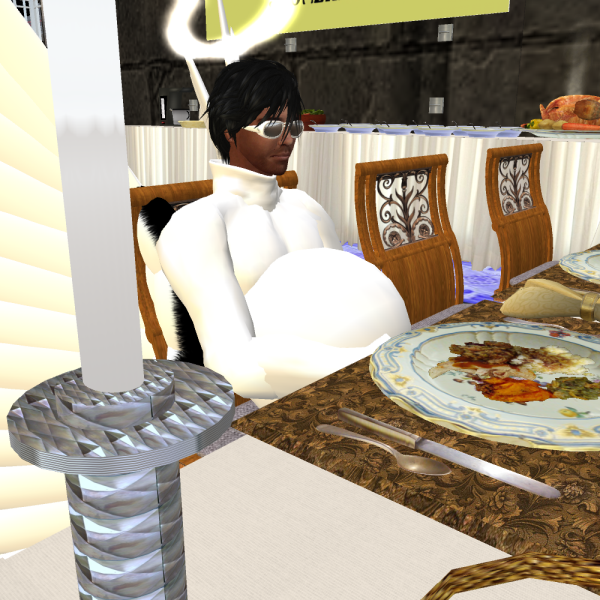
As a solitary person with no “real-world” relatives, my observance of Thanksgiving differs from most. I have RL friends who are as family to me, but for the past several years circumstances have prevented us from celebrating holidays together. Since coming to the virtual world in 2006, my Thanksgiving has been almost entirely virtual.

In the early years, I sat down for a virtual dinner with one or two friends.

Image

Thanksgiving 2009

Then after Master took me as his, we had very lovely Thanksgiving dinners in our home in Second Life.

Image

You may think a virtual feast is easy, but I worked hard cooking the meal!

Image

Today in Littlefield Grid, our “family” has widened to include everyone on the grid. We have a table set up at Stonehaven and some folks dropped by to share good conversation and friendship.

Image

Apparently the virtual meal is still quite satisfying!

Image

I am so grateful for all the fabulous people I have known in the virtual world. Thank you, each and every one of you, for the beauty and joy and fun you have brought into my life. And thank you, Master, for loving me–it is what makes everything possible.

.

Ocean City Music Pier

I went on a bit of a building bender the past few days. To all the people who kept trying to chat with me, I offer my deepest apologies. Please don’t take my non-responsiveness personally. When I get my head down and totally focused on a project, I’m completely engaged in it and find it impossible to pay attention to anything else. Including things like eating, sleeping, etc.

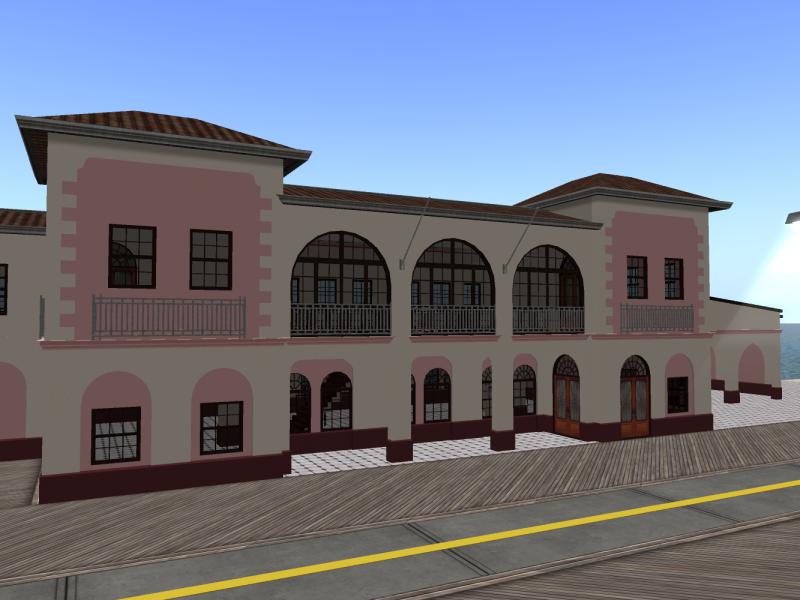
My latest obsession, at Master’s suggestion, pays tribute to the Ocean City Music Pier, an iconic auditorium on the beach in Ocean City, NJ, vintage 1928. This is one of my contributions to our new Jersey Shore regions.

Ocean City Music Pier, Littlefield

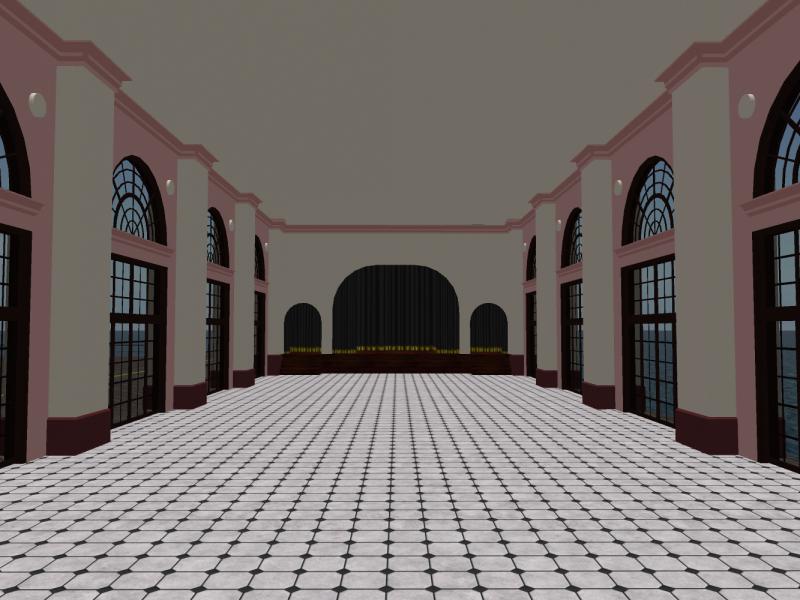
I call it “tribute” rather than reproduction because I had to make a few major adjustments due to space restrictions. But yes, it sits on a pier off the boardwalk, and yes, it has an auditorium with a stage. And I did my best to capture the essence of the architecture, if not the real-life layout.

Here’s the real one, interspersed with photos of my “homage”:

Music Pier 2

Music Pier 5

I’ll take another, better photo once I have a chance to add the last few decor items, some accent lighting, etc.

“Tribute to Ocean City Music Pier” weighs in at 3030 prims, not counting the working stage curtains and doors. Gotta love building in Opensimulator!

Have you ever been to the real Ocean City Music Pier? I’d love to hear about your experience.

.

Remembrance

I hate this day.

Twelve years later, how should we continue to observe this tragic day? I will share my own personal opinion, noting that it is mine, applies to me only, and everyone else’s opinion is up to them.

What I hate about this day is the extent to which we allow ourselves to be frozen in grief, or in anger. Both emotions are honorable, appropriate, and good. But if we aren’t mindful, they can define us. Then, every year on this day, we find ourselves observing the occasion by striking out in rage against whoever it is we blame.

To me, that awards a victory to the terrorists.

I’ve never understood how killing someone is supposed to prove that one is better, or stronger. To me it only proves that one is more brutal.

For me… and I emphasize, for ME… the best way to honor this day is to be as unlike those terrorists as I possibly can be. To choose to act in the way that is as different as possible from what they hoped to achieve.

Today, instead of rage, I will embrace compassion. Compassion is the polar opposite of what they wanted us to feel. They expected that we would be enraged, and respond in kind, striking back with brutality as they struck us. But they don’t get to have their way–not from me, anyway.

I have no control over what governments do. I can only control what I do.

So today, instead of tearing down, I am going to build something.

Instead of feeling fear, I am going to do something fun.

Instead of feeling grief, I am going to rejoice in love.

And that is how I defeat terrorists.

Littlefield Grid members observing the day together at the 9-11 Memorial

.

New Horizons

It was late April of 2010 when Walter first led us to explore grids other than Second Life. At that time, visiting other grids was pretty grim for those of us who find our pleasure the virtual world more by art and design than by technology. It’s hard to believe just how far we have come in three short years. What was the barren frontier has become a perfectly reasonable alternative to Second Life.

It’s been awhile since I posted anything about what I have been up to on our grid. So I’m taking this opportunity just to share a few snapshots of what I’ve been building.

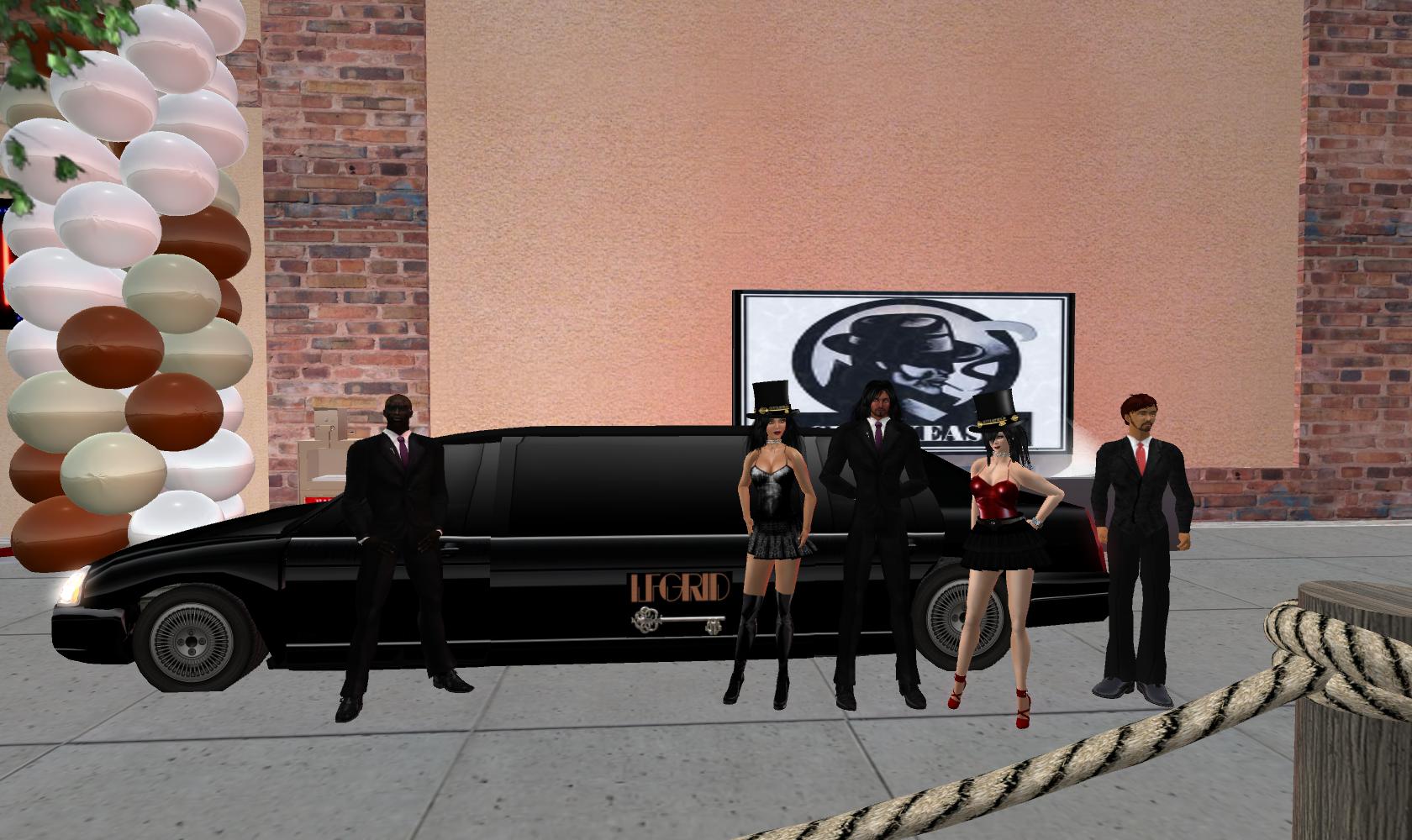
In April of 2013, almost exactly 3 years after we first tried Opensim, in a vast leap of faith, we opened our own independent virtual world: Littlefield Grid. Here is our Admin Team arriving at the Grand Opening gala.

littlefield-grand-opening-01

We just added our 500th member a couple of weeks ago, and are closing in on 600 already. Littlefield Grid consists of about 140 regions, centered around a central shopping district and five welcome and hangout regions. The welcome regions include Littlefield Hangout, a beautiful redwood grove.

redwood-grove-littlefield-01

Littlefield Engineering is a hangout for those who like to talk tech. It was my experiment in Brutalist architecture.

littlefield-engineering-brutalist-01littlefield-engineering-brutalist-02

One of Littlefield’s distinctions is our enthusiastic band of content creators. I have built lots of stores for them, where they share their creations with members for free. For me, building a store is often an opportunity to explore a new architectural style. I created a few stores in Art Deco style for my beloved who especially likes that style.

art-deco-littlefield-01art-deco-littlefield-06

One of the biggest challenges, when we left SL for the Opensimulator world, was vegetation. The quality of available landscaping materials in Opensim worlds in 2010 was distressingly poor, especially compared to what was available in SL. But three years later, things are looking up; we now have one whole sim of good plants and decent trees (and they are all free to our residents).

garden-center-littlefield-02

I enjoyed learning about Victorian style when building this Queen Anne and a Victorian shopping street.

victorian-queen-anne-littlefield-01victorian-queen-anne-littlefield-04

One of my most recent builds was a conference center in the style of a mountain lodge – my little homage to the luxury hotels in the National Parks of the Western U.S.

conference-center-lodge-littlefield-01conference-center-lodge-littlefield-02

For more snapshots of Littlefield Grid, with many more photos of my builds, visit Camryn’s Flickr stream.

.

Never stop learning

“No one is good to start with;

It takes practice for your work to match your vision.”

This wisdom comes from the amazing Robin Sojourner, one of the most respected creative forces in the virtual world. Robin’s quietly generous creativity permeates the virtual world through her free scripts and templates, the beautiful things she makes, and her teaching of building and texturing skills. “One of the things that excites me,” she says, “is that people who have no idea that they are creative come into Second Life and find out that they can make things. We are taught, at some point early in life, that creativity is reserved for the ‘creative types’ and they are special and there are only a few of them… and it’s just not true. All of us can do it.”

I was like that. If you’d told me in early 2006 that within a few years I would be so engaged in creating, I would have laughed. But now look. I’ve built whole towns and countless sims, and everything from jewelry to palaces. It turns out I have an eye for fashion and for architecture, something I would never have known about myself, had it not been for the virtual world.

But I think I am not done learning yet.

We have a similar creative force on Littlefield Grid, the marvelous Aaack Aardvark, who is generously giving his time to teach us how to make things in mesh. Our classes are fun and enlightening, and Aaack is a wonderful teacher who keeps us laughing. I am having a great time. The learning curve will not be easy, but with help, who knows. Maybe I can finally make a tree that satisfies me. Maybe more.

The day that you stop learning is the day that you start dying. Keep opening yourself to new things.


Ten Years

I spend more time than ever in the virtual world these days, mostly in Littlefield Grid. But today I took some time in good old Second Life, to observe the 10th anniversary of the official launch on June 23, 2003. After all, Second Life is where I was born.

It is easy to be critical of Second Life. Those of us who inhabit the OpenSimulator world, especially, often are. But I have to admit that I was moved by my experience today. Let me explain why.

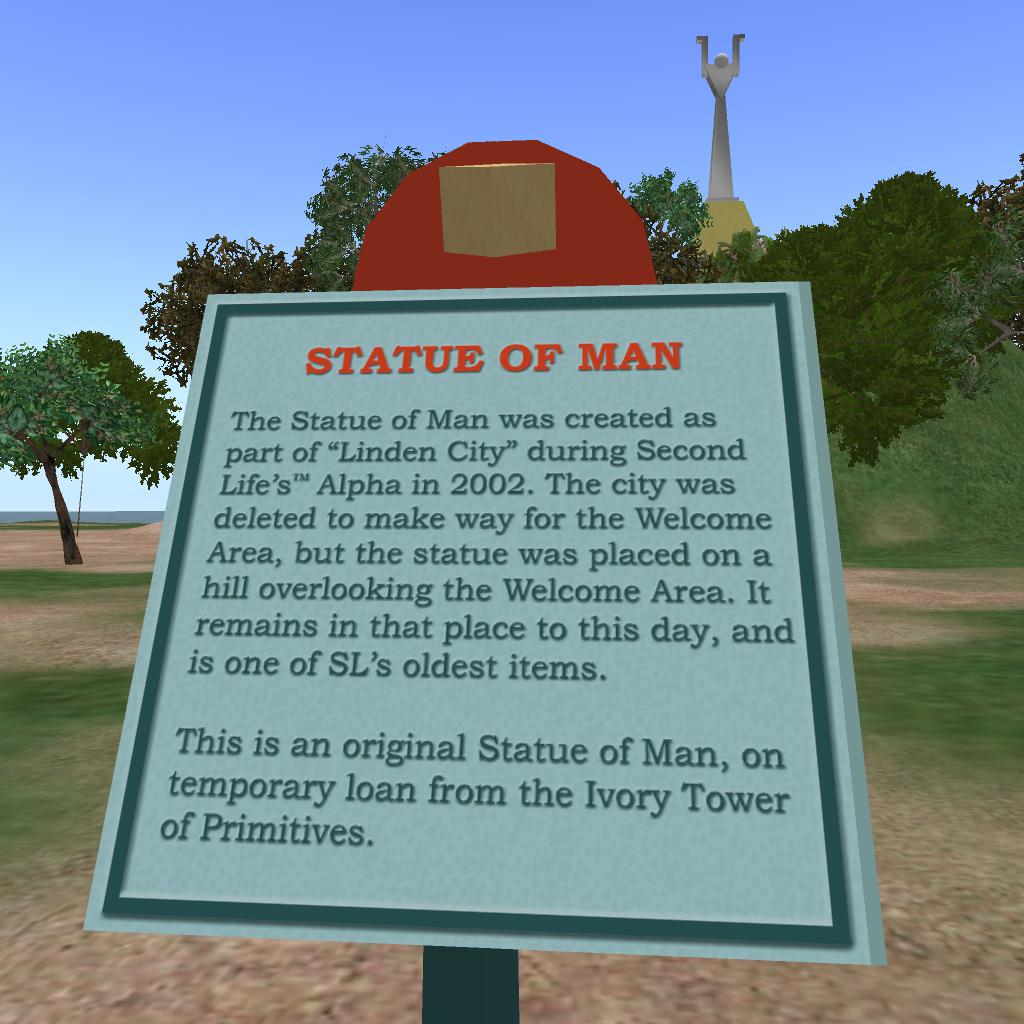
Statue of Man 2002When speaking of Second Life, it is important to draw a distinction between Linden Lab—the commercial entity that created the Second Life software—and the residents, the community of people who created essentially everything that is IN Second Life.

I am no fan of Linden Lab. In my opinion, Second Life is one of the most spectacularly mismanaged businesses in the history of business. Their chronically poor judgment has alienated countless thousands of contributors to the virtual world, and kept the company on the edge of disaster for years.

But somehow, after ten years, the place is still standing, at least for now. Despite inept management, over a million people still log in to Second Life at least once a month. Why? Those one million people are not visiting Second Life because of technology. What keeps them coming back? They come because of people: the residents, the community, the world that has been created, not by Linden Lab, but by people like you and me.

Linden Lab is not Second Life. We are.

Second Life’s 10th Birthday was, for me, a celebration of the mind-bending creativity of the residents of the virtual world (every virtual world, not only Second Life). Seeing it showcased all in one place made it clear just how deep the talent pool is. I was awed by resident creativity expressed in immersive 3-D art… streaming media, machinima, radio and television stations… vehicles, from cars to sailboats to rocket ships… relationships: communities, friendships, romance and sex… battle weapons from swords to It all started with a cube.tanks… animations for every conceivable activity… a massive virtual fashion industry fueling $32 billion USD in virtual goods transactions… deep and complex roleplay communities… education, and charitable fundraising… scripts that enable intriguing things to happen… exquisite textures and building materials… cities and landscapes in astonishing variety… every conceivable environment from castles to post-apocalyptic ruins, bayou shacks to gleaming palaces, and everything in between… and ideas, omg, incredibly creative and innovative ideas.

These are the components of the virtual world, and they were not created by Linden Lab. They were created by us—the users, the residents, the virtual world community. This is what inspired me today. Not Linden Lab, but imagination and the human spirit.

On the occasion of the 10th anniversary of the official launch of Second Life, I celebrate the creativity of 30 million human beings who have lived in this and every other virtual world. I toast their thought, their craft, their innovation, their art and their science. I praise the generosity of spirit that inspires me every day, when people pull amazingly wonderful and original ideas out of their minds, and share them with the rest of us in Second Life, in Littlefield, and in every virtual world.

Let us raise a glass to creativity! Hear, hear!

.

Real Virtual People

How “real” is the virtual world? Is it more than a cartoon, a video game or a fantasy? And what does “real” mean, anyway?

Is this place realThere are many shades of real.

We might say that something is “realistic” if it closely resembles reality. Subtle shading and shadows in the corners of a room, or motion capture animation may make a scene look “almost like” the real thing. To say something is “realistic” acknowledges the craftsmanship of its creator. But saying that something is “almost like” the real thing is an admission that it’s not the real thing. It may resemble a real tree, but it is not, in fact, a physically real tree—it is a collection of pixels. I don’t think very many people believe that the virtual world is the same as the physical world.

That doesn’t mean it’s not real.

Whether or not it’s physically real, the virtual environment can affect us physically. It’s like when a skillful filmmaker weaves together story, cinematography, acting and other elements to make light, color and motion affect us emotionally, and even physically if we recoil in a horror movie or weep over a sad ending. In the same way, a well crafted scene in a virtual world can evoke real-world physical sensation and emotion. The serenity of a quiet virtual forest, under a protective canopy of giant trees, with sounds of birds, brooks and breezes actually calms my physical body in the “real” world. The desolation of a vacant shack on a dry, windswept plain makes me cough as if I can feel the swirling dust catch in my throat. Standing around in a virtual snow scene makes me feel cold in the physical world—and putting a sweater on my avatar warms me up.

Of course there is the whole matter of virtual sex and BDSM, and the very real arousal it can incite. “In the real world, arousal mostly happens between your ears anyway,” a friend of mine said recently. “Virtual sex is just like physical sex—but with better animations!”

We all know that the emotions we experience through our encounters in the virtual world are real. The whole gamut, from mirth to rage, wonder to repulsion, heartbreak to love—yes, love—all just as authentic as if they were triggered by events in the physical world. And the qualities of the human spirit we encounter are also real: generosity, creativity, selflessness and selfishness, forthrightness and deceit.

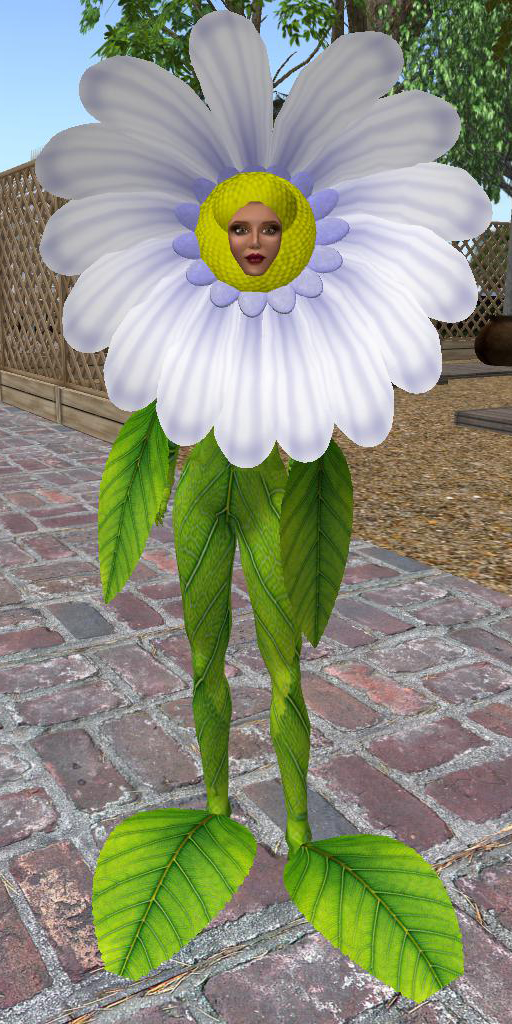
Flower AvatarSo, is the virtual world real?

A better question would be: are your experiences real? Does the virtual world evoke real emotions and sensations? Is pleasure real? Is inspiration real? Is friendship real? Is excitement real? Is beauty real? Is laughter real? Are art, craftsmanship and creativity real? Dare I ask: is love real?

Some people ascribe no reality to the virtual world; they see it as a cartoon, with no value in and of itself. They treat it as if it were only a screen separating them from other “real” people. They seem impatient, then, to get past this screen and connect with a physical person, who is, to them, the only person who matters. These are people who typically don’t put much effort into their avatar, since the virtual world is not important to them. They don’t care about their avatar, or yours, but they are very interested in who you are in “real” life, where you live, what you look like, how old you are, etc. For them, the virtual world is not real at all. For them, the physical world is the only reality.

On the other end of the continuum, some of us inject so much of our conscious awareness into our avatar that our physical self becomes secondary. As in the movie “Surrogates” I live through my avatar much more than through my physical self. If you only know me in the physical world, you don’t really know me. Camryn Darkstone is the “real” me. In the virtual world, I am freed from some of my physical limitations and allowed to be my most authentic self. Of course it can’t be carried to extremes, since I do enjoy some pleasures with my physical body that aren’t available in the virtual world, for example singing and food. But in terms of my sense of self, and everything else that is most important, I am much more present as Camryn Darkstone.

For others, the avatar is a fantasy, a character they have created, through which they role-play. Some even view the avatar as a separate person, with a life of its own. I know at least one person who, when speaking as his avatar, refers to himself in the third person, as though he and his avatar were two different people. The avatar refers to “that person behind the keyboard” as if it were someone else.

virtual-worldI can’t wrap my mind around that kind of disconnection. For me, there is no boundary between myself and Camryn Darkstone. I am Camryn Darkstone. Camryn Darkstone is real. In fact, Camryn Darkstone is much more real than my physical self. Camryn Darkstone is a better representation of my sense of self than my physical presence.

The seamlessness between virtual and physical has been enhanced since I accepted my Master’s collar. He is a TPE Master—Total Power Exchange—and he is my Master all the time, 24/7, not just for the duration of a scene. I don’t segment off certain areas of my life for him to dominate. He has total access. He gets to be in charge of every part of my life, virtual and physical. So the seamlessness between the virtual and physical aspects of my life is strengthened even further by him.

It is also strengthened by the culture of our family. Whereas many people draw strict boundaries of anonymity and privacy when interacting in the virtual world, within my family we are very open. Each of them, for me, is the same type of blended virtual-physical person as I am. We don’t role-play, we are our authentic selves. I voice with them. They know my real name, and some even know my address (and are likely to send me mail order gifts, as I do for them). My Master has been to my home. They know what I look like, where I work and what I do for enjoyment. And yet, even with all of this “real” world information, I am still Camryn Darkstone to them. I am one person—submissive, builder, tree lover, horse racing enthusiast, fashionista, bourbon connoisseur, anglophile, musician. This—all of this, virtual and physical—is Camryn Darkstone.

I am not a virtual person. I am a real person in a virtual world—a real person whose real life is extended, enriched and enhanced beyond the limits of the so-called “real” world.